Mezokovesd, the heart of Matyo Land can be easily reached by train from Budapest, it’s a great day trip for those interested in Folk Art.  The Matyo are a Roman catholic people who settled in and around Mezokovesd in Hungary in the 18th century.  They are known for their wonderful folk dress and folk art particularly embroidery.
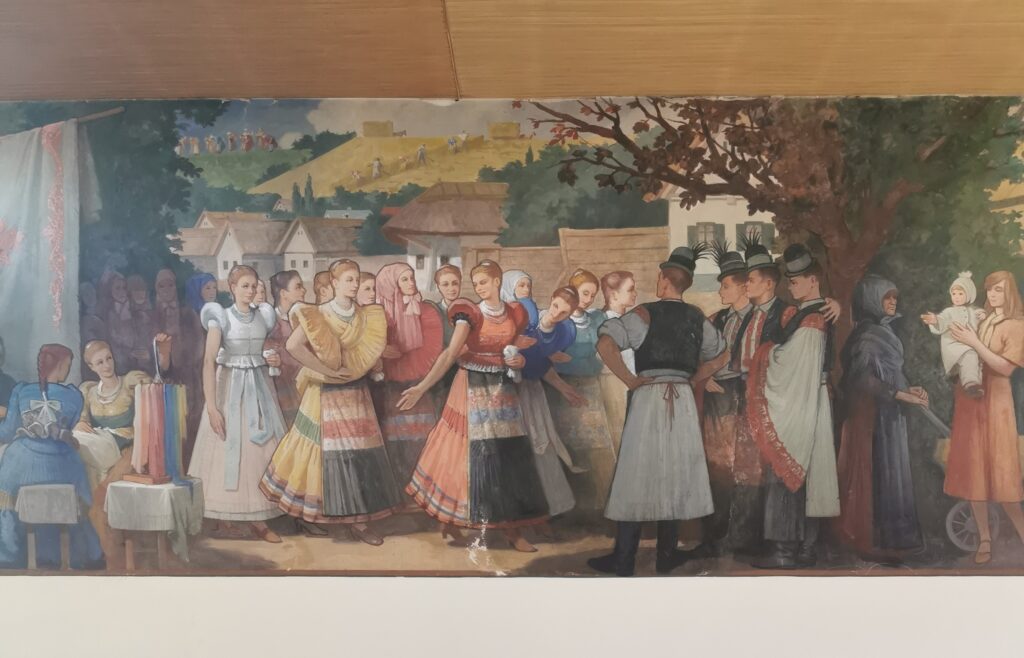
Mural at the train station in Mezokovesd
The Matyo museum and the Hadas (living museum) within an easy walk of each other, 15 minute walk or short bus ride from the train station. The Matyo museum gives a great overview of Matyo folk tradition, complete with costumes, and a typical dowry room with the dressed bed. When I last visited it was very quiet and I was treated to a tour (in Hungarian) by one of the curators.


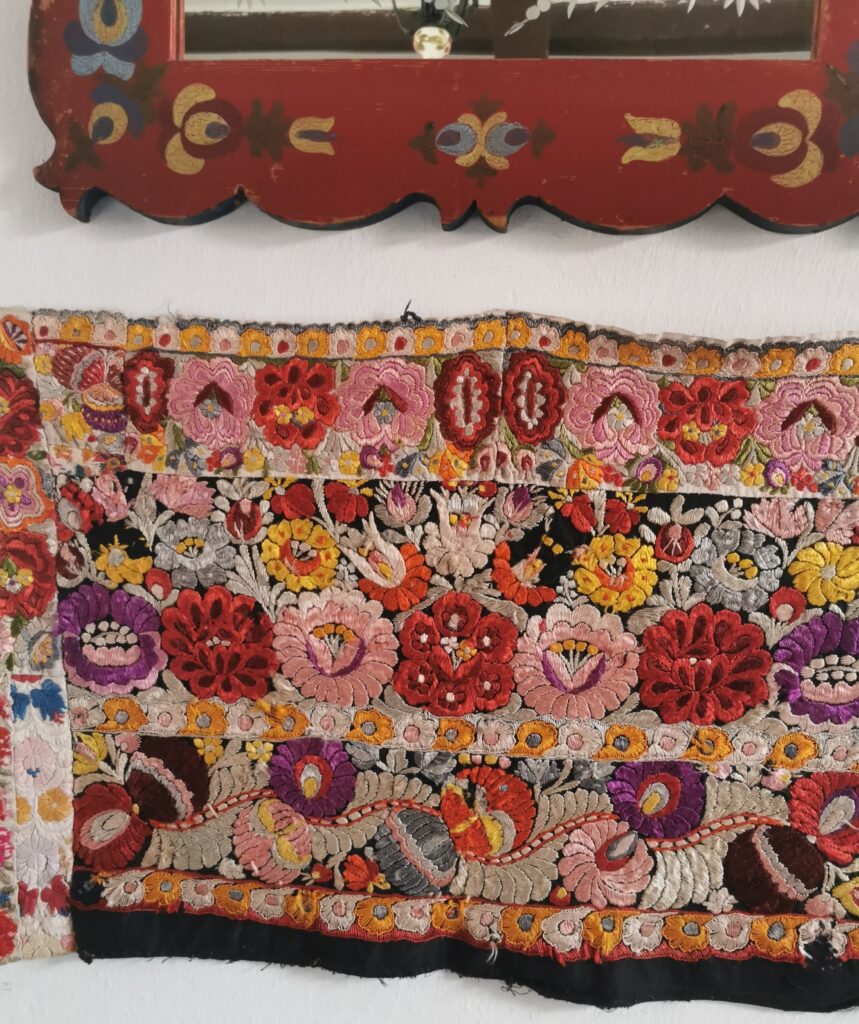
Old Matyo embroidery in a traditional Matyo room in the Hadas

The Hadas is signposted and has several workshops operating in traditional houses, including furniture painters, a potter, a weaver, and embroiderers. There is a lovely little café / tea garden with a small museum and a shop selling decorated honey biscuits. Its small and compact and all very easily walkable.

t to be missed in the house of Bori Kis Janko. Born in 1876 Bori Kis Janko was the mother of Matyo embroidery, she was a pattern designer and embroiderer, from the late 1800 s she was involved in the promotion of Matyo embroidery in exhibitions, at the beginning of the 20th century Matyo embroidery began to be seen as a commercial endeavor and Bori was one the first to sell her embroidery. You can see some of her original designs in the Matyo Museum. Boris Kis Janko was born in Mezokovesd and lived her whole life in the same house which still stands and is open for visitors, in the Hadas.
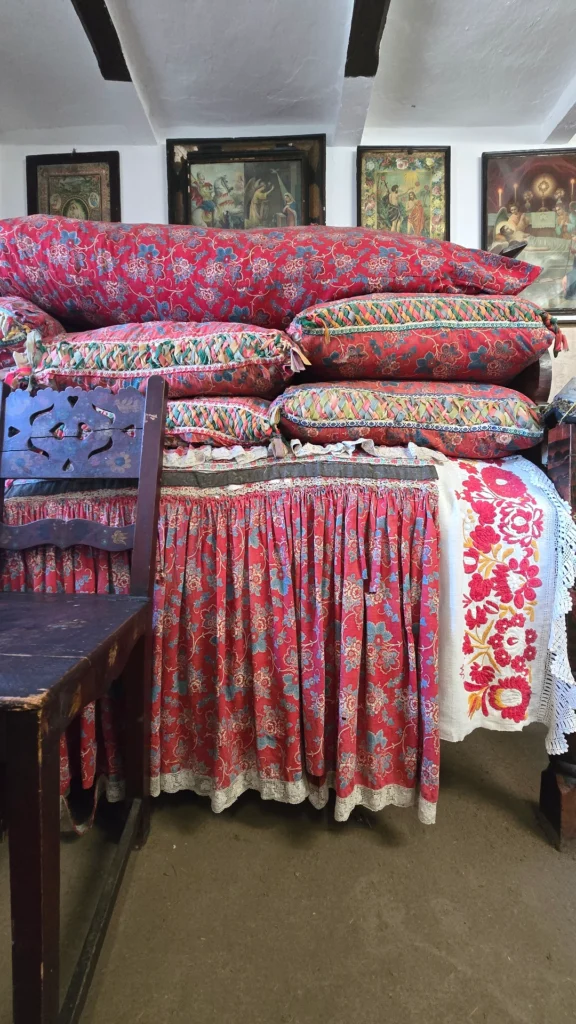
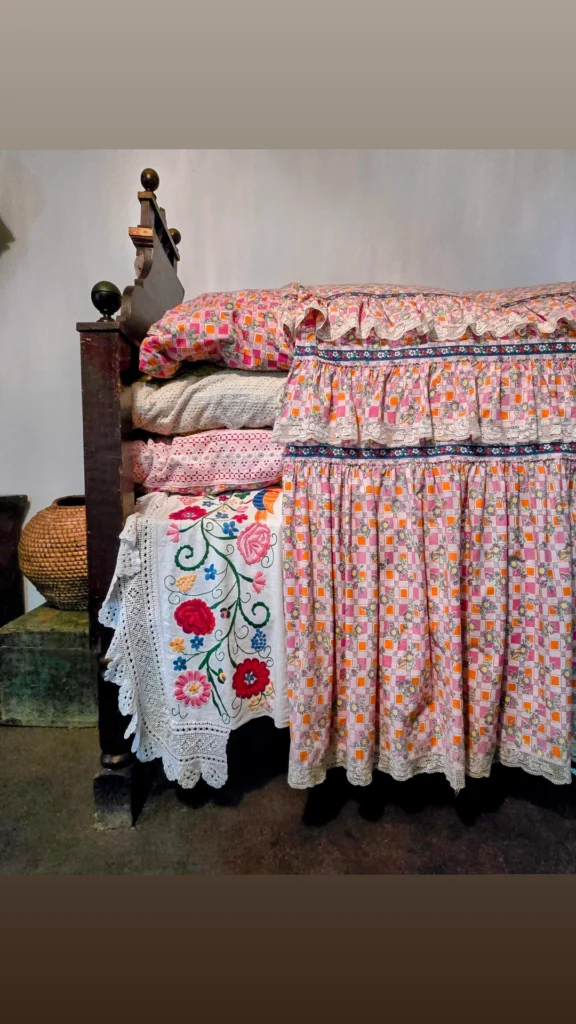
 

the dressed bed in the clean room in Boris' house in the Hadas
The bed that Bori used

The Matyo Folk Art Association also based in The Hadas, promotes the folk art of the Matyo people and can often be found at festivals, demonstrating techniques and displaying and selling embroidery. The centre in the Hadas provides a history of the Matyo peope and their customs, it’s well worth a visit

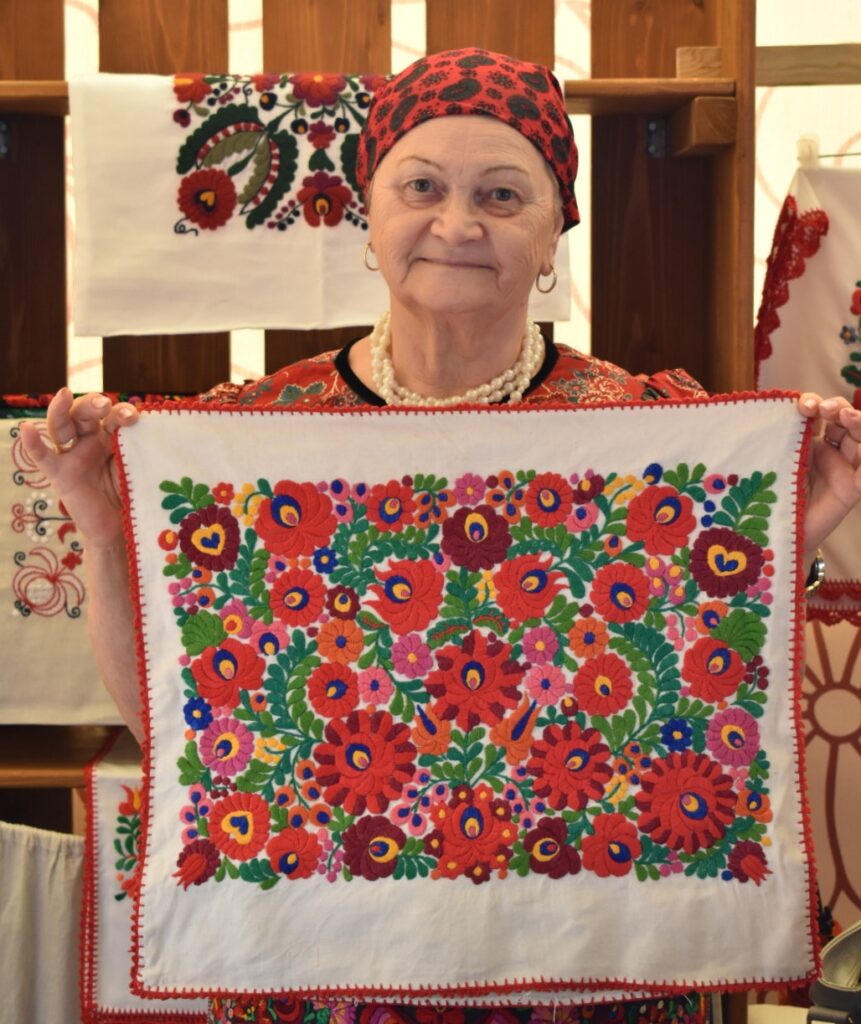
I bought this cushion cover pictured here with the maker!

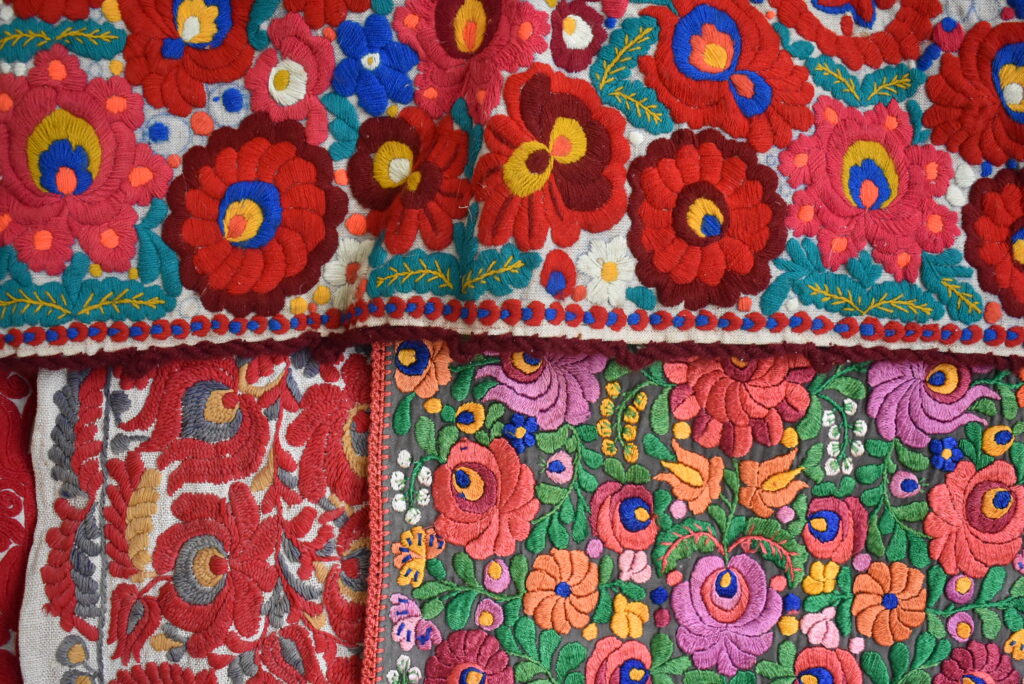
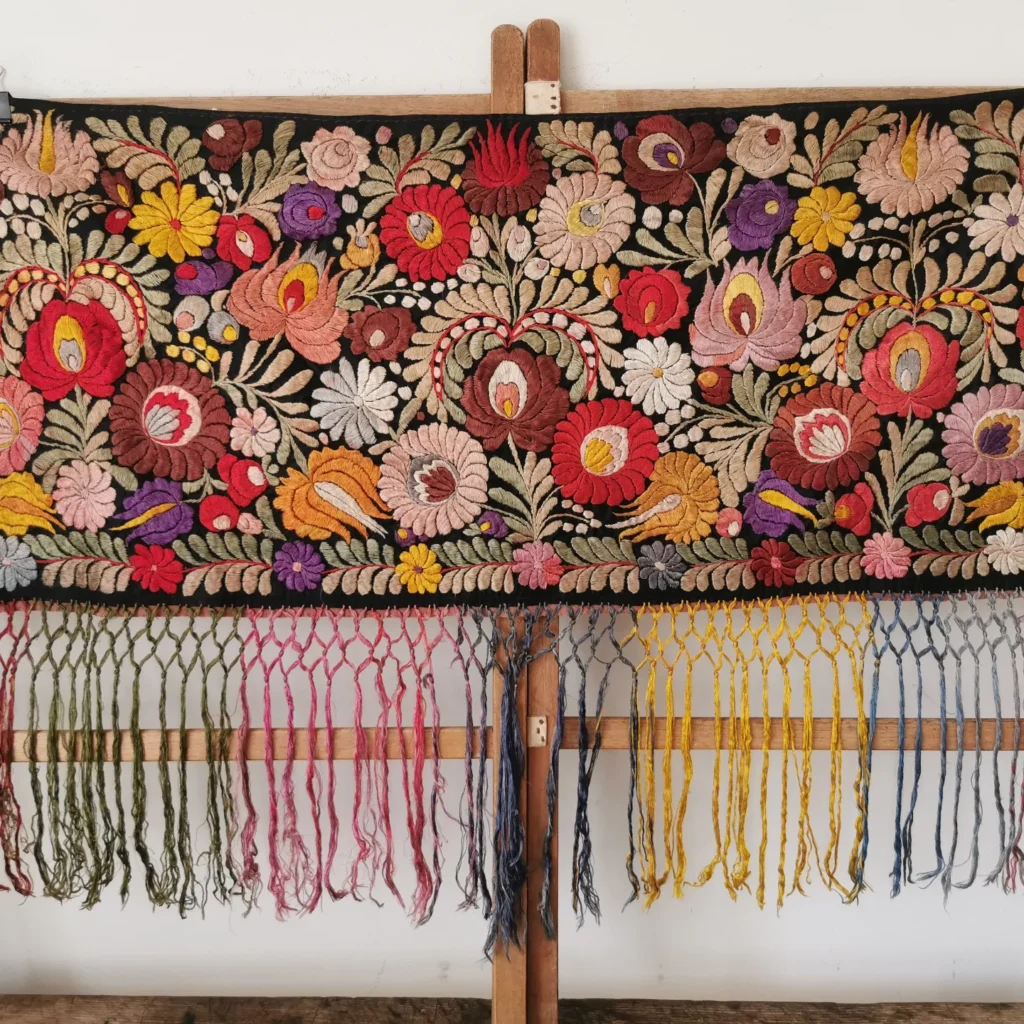
Matyo embroidery has been inscribed on the Unesco list of Intangible Cultural Heritage since 2012. Embroidered in silk floss or wool mostly using satin stitch, Matyo embroidery mostly features colourful stylised flowers, Matyo roses are the most common and well-known.

Traditionally the embroidery covered most of the cloth with little of the ground cloth visible, the base cloth may be home-loomed hemp, felt or cotton in black or neutral.